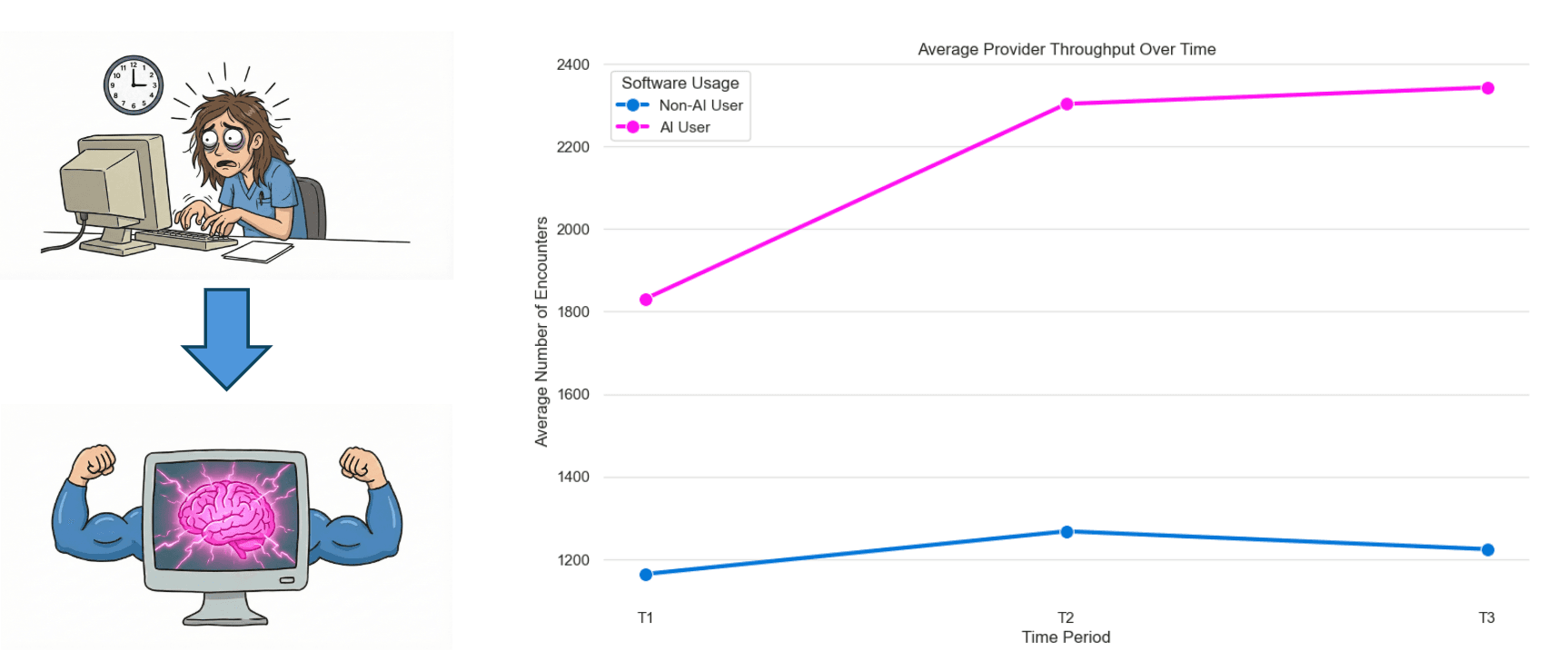
Primary care clinicians spend large amounts of their working hours, both in- and outside of the clinic, updating electronic health record (EHR) documentation for patients. In response, LLM-based AI tools have been increasingly introduced into primary care settings over the past couple of years. The goal of this project is to quantitatively investigate the impact of such AI medical scribe tools on clinician work hours and to document their uptick in use over early trial periods. The database at hand includes hundreds of thousands of patient encounters from 24 ambulatory, outpatient, primary care facilities, employing over 900 providers, over 300 of which have become active scribe users. The metrics of interest include visit volumes, documentation hours, and EHR time, as well as uptake patterns by clinician type, facility type, and gender.